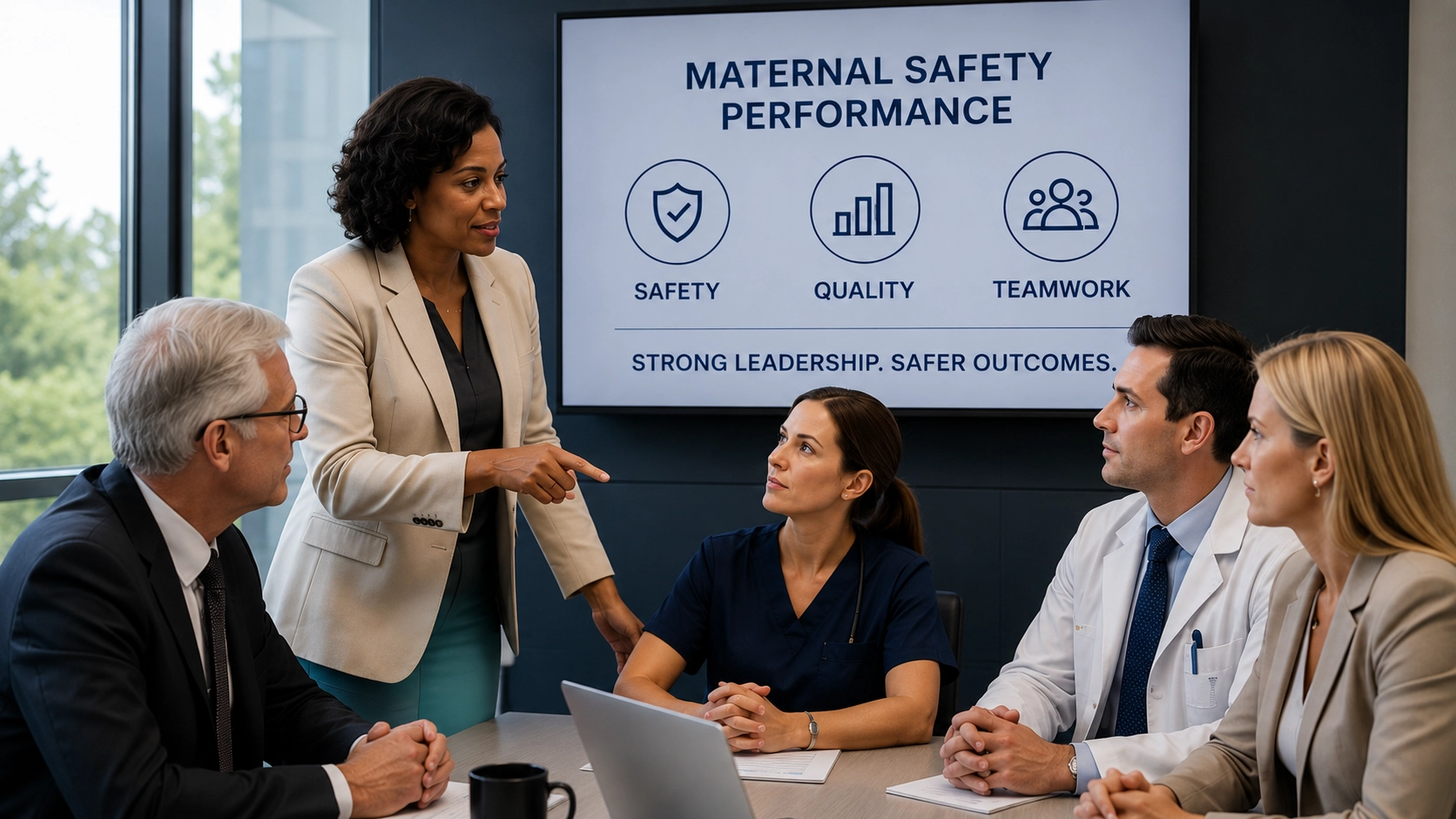
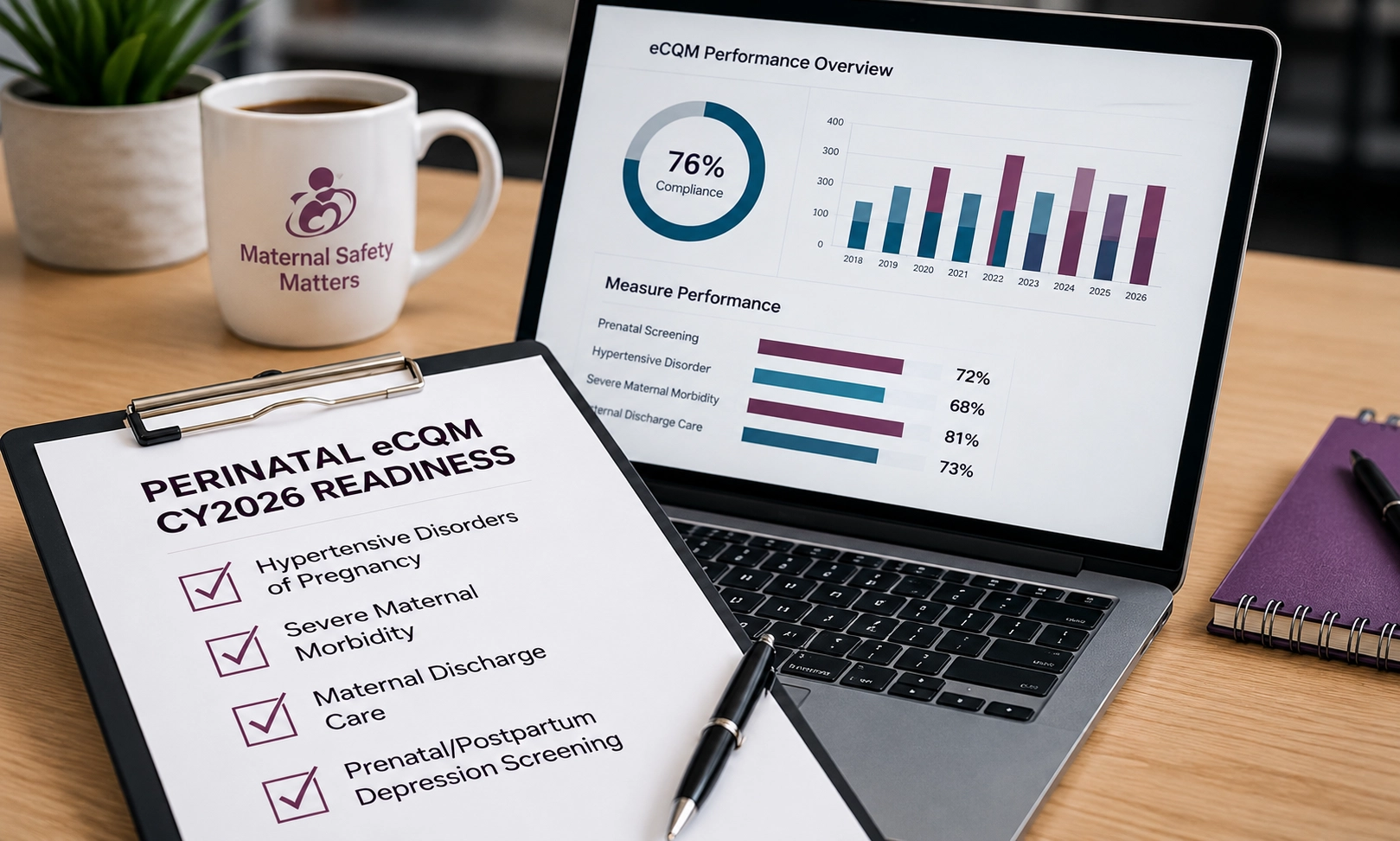
As healthcare continues to transition toward outcomes-driven quality measurement, maternal care leaders face increasing pressure to demonstrate both regulatory compliance and measurable clinical improvement. The CY2026 Perinatal Electronic Clinical Quality Measures (eCQMs) represent more than another reporting requirement—they signal a shift toward accountability for the systems, communication, and clinical workflows that influence maternal and neonatal outcomes.
For executive leaders, preparation begins long before surveyors arrive.
Beyond Compliance
Many organizations focus heavily on policy updates and documentation. While these remain important, they are only one part of a successful maternal safety strategy.
High-performing organizations understand that strong outcomes depend on three interconnected elements:
- Reliable clinical workflows
- Consistent interdisciplinary communication
- Leadership visibility and accountability
Without these foundations, even well-written policies can fail during high-risk clinical situations.
Where Organizations Commonly Struggle
During organizational assessments, several patterns frequently emerge:
- Variation in clinical practice between units
- Communication gaps during patient transfers
- Delays in recognizing time-sensitive conditions
- Documentation inconsistencies
- Policies that do not reflect actual bedside practice
These issues rarely result from a lack of clinical knowledge. More often, they stem from workflow complexity and inconsistent processes.
Building Survey Readiness Year-Round
Organizations that consistently perform well during accreditation reviews don’t prepare only before an inspection. Instead, they develop systems that support continuous readiness.
Effective preparation includes:
- Regular policy reviews
- Workflow validation
- Clinical chart reviews
- Staff education
- Standardized communication tools
- Leadership oversight
When these elements work together, compliance becomes a natural outcome rather than a last-minute objective.
Moving from Readiness to Resilience
Ultimately, the goal isn’t simply passing an accreditation survey.
It’s creating clinical systems capable of supporting safe, consistent care every day.
Hospitals that invest in both executive oversight and frontline readiness position themselves to improve patient outcomes while reducing organizational risk.